

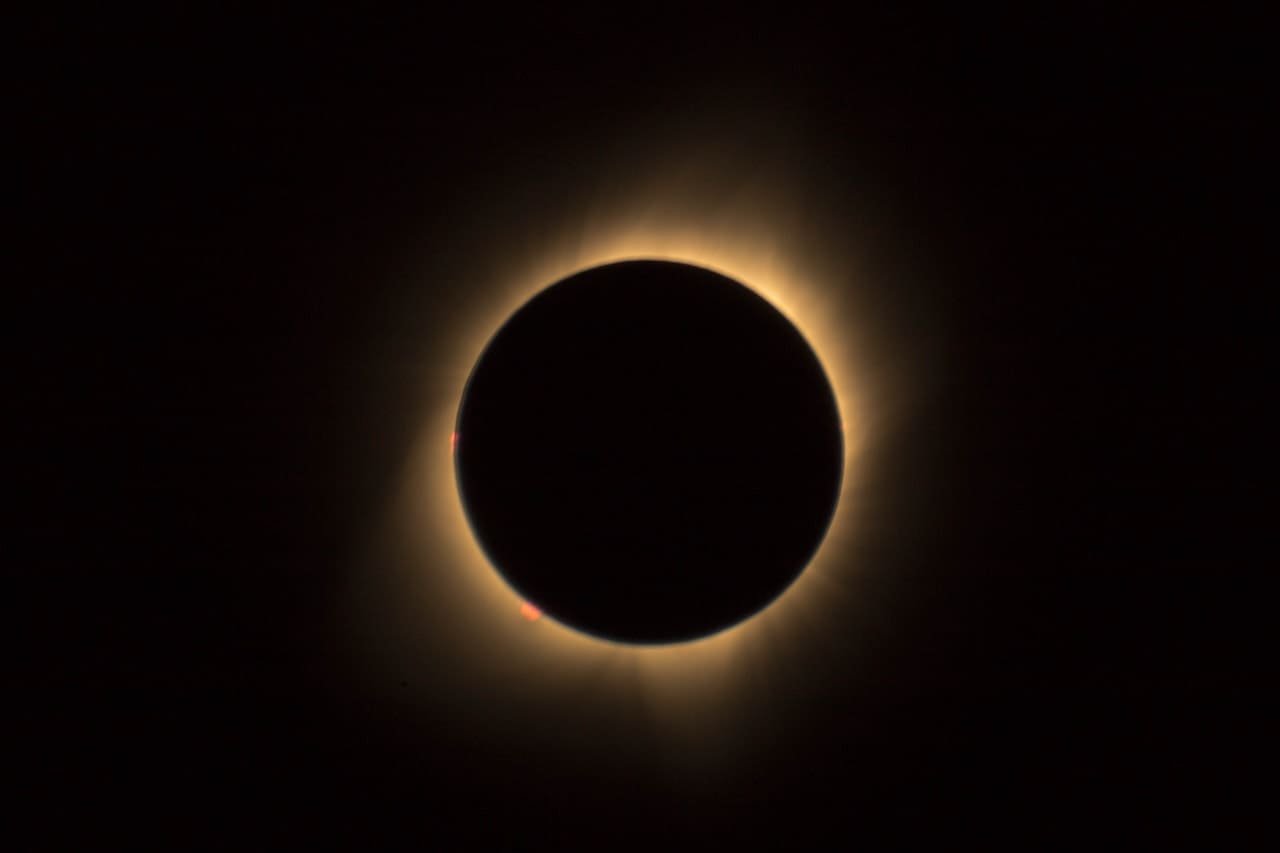
Solar eclipses, those mesmerizing celestial events where the moon passes between the Earth and the sun, captivate and bewilder individuals across the globe. While they offer an awe-inspiring spectacle, observing a solar eclipse entails taking prudent precautions to ensure the safety of your eyes. In this article, we delve into a detailed exploration of how to safeguard your eyes during solar eclipse viewing, informed by insights from organizations like the Canadian Space Agency and NASA.
Understanding Solar Eclipses
At the heart of a solar eclipse lies the enchanting phenomenon where the moon’s shadow obscures a part or the entirety of the sun, casting a surreal spectacle upon our skies. The allure of a solar eclipse often tempts observers to cast a direct gaze upon the sun, an act that can be perilous without the adoption of the right protective measures.
Solar Viewing Glasses: The Definitive Solution
The Canadian Space Agency (CSA) underscores the critical importance of eye protection during solar eclipse observation. The CSA staunchly advocates for the use of certified solar viewing glasses as the safest and most effective means to experience a solar eclipse. These specialized glasses are equipped with filters that proficiently intercept harmful ultraviolet and infrared radiation, rendering it feasible to observe the sun without any risk.
Bill Nye, the beloved “Science Guy,” passionately underscores the significance of appropriate eye protection when partaking in a solar eclipse event. He warns that direct viewing of the sun during an eclipse, sans protective measures, can lead to an affliction known as solar retinopathy. This condition arises when the intense solar rays compromise the cells within the retina, potentially causing irreversible vision impairment.
NASA’s Astronomical Insights
As the foremost space agency of the United States, NASA disseminates a wealth of insights pertaining to the safe observation of solar eclipses. NASA echoes the significance of employing certified solar viewing glasses, emphasizing their pivotal role in preserving ocular health. Without them, the intense luminescence of the sun can exact a heavy toll on the eyes.
Enhancing Safety Measures
In addition to the indispensable role of solar viewing glasses, additional safety guidelines merit consideration:
- Certification Validation: It is imperative to ascertain that your solar viewing glasses bear the seal of certification. Keep an eye out for labels such as “ISO 12312-2” or “CE” to ensure their authenticity.
- Homemade Filters: A No-Go: Steer clear of crafting makeshift solar filters or resorting to regular sunglasses, smoked glass, or photographic film for solar observation. These materials are manifestly ill-suited for eclipse viewing. Instead, try to creating a DIY Eclipse Projector.
- Young Observers: If there are children in your company, it is paramount to convey the gravity of refraining from gazing at the sun without adequate protection. Active supervision is essential during the eclipse event.
- Timing Precision: Understand that it is only safe to view the sun without protective eyewear during the brief interlude of totality in a total solar eclipse. As the sun commences reappearing, promptly don your solar viewing glasses.
- Photographic Prudence: If you are contemplating capturing the eclipse with a camera or smartphone, be judicious in your approach by deploying a solar filter over the camera lens. Attempting to view the eclipse through the viewfinder sans protective measures can jeopardize ocular safety.
Conclusion
Solar eclipses offer extraordinary spectacles that merge fascination with wonder. Nevertheless, the act of observing them without due protective measures could potentially imperil your ocular health. To revel in the grandeur of a solar eclipse while preserving your eyes, it is imperative to heed the wisdom of the Canadian Space Agency, NASA, and other reliable sources. Adopt certified solar viewing glasses and embrace their recommended safety guidelines. By doing so, you can luxuriate in the splendor of a solar eclipse without compromising the well-being of your eyes, all while forging an indelible connection with the cosmos.